Next year they're going to leave it empanadas
In Chile, September 18 is celebrated even at the office. Next year someone will leave an empanada for a computer. That joke hides the most important decision a company will make about AI.
 Rodrigo MedinaFounder & CEO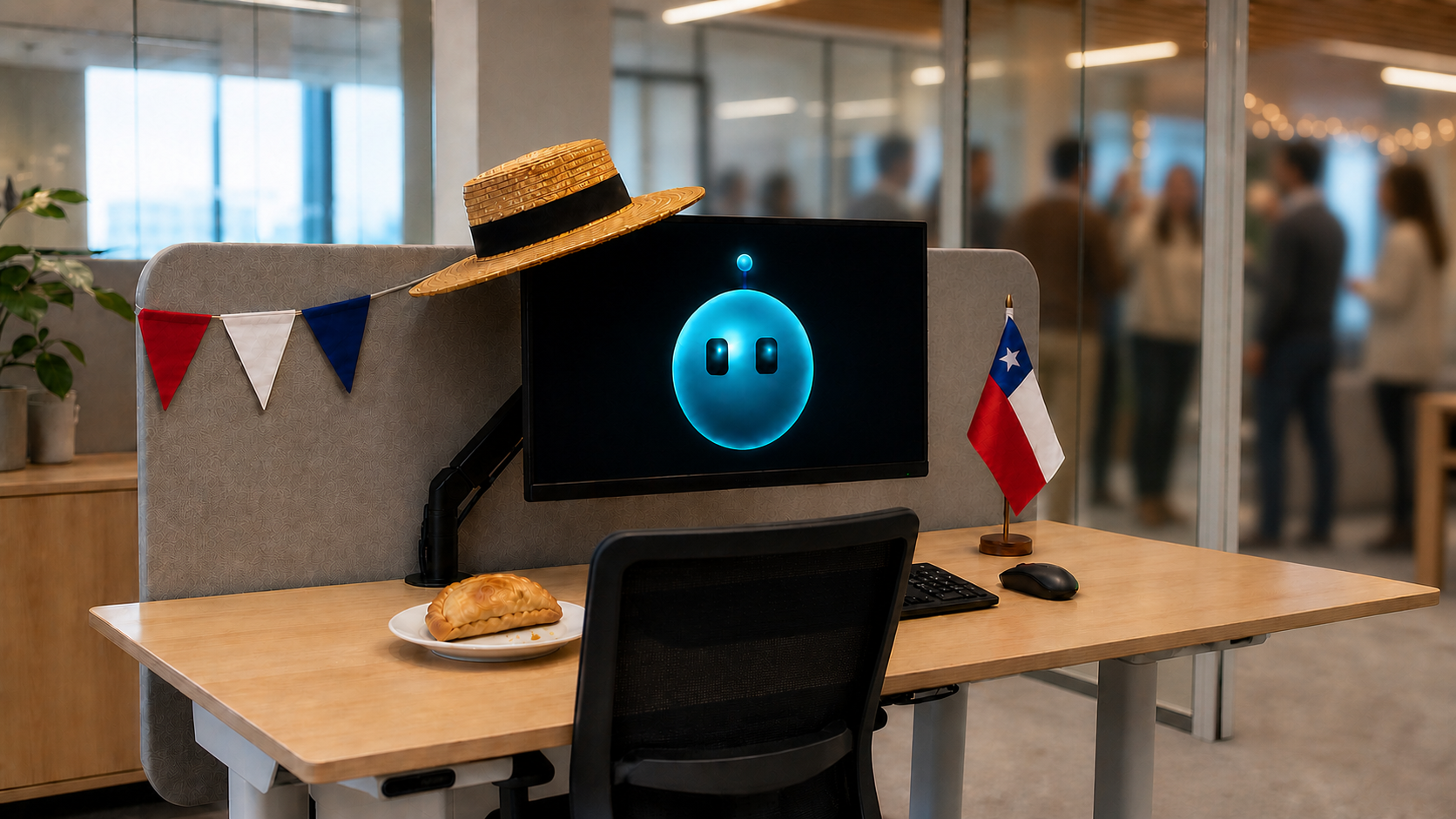
In Chile, September is the month of the Fiestas Patrias. The 18th marks the first national government, in 1810, and the whole country takes the week off, sometimes more: flags on every building, fondas (the pop-up food and dance halls that appear everywhere), cueca, chicha, and beef empanadas. Companies celebrate before leaving for the short break. It's one of the few office traditions that has survived everything, including digitalization.
I'm certain that next year, between the laughter, the anticuchos and the wine, someone is going to leave an empanada, a small glass of chicha, or a chupalla, the straw hat of the Chilean countryside, on top of a computer. Half joking, half serious, for their digital colleague, so it gets to celebrate with them too.
I want to explain why that joke is part of one of the deepest changes companies are going to live through in the age of agentic artificial intelligence.
Nobody puts a hat on the ERP. Nobody leaves a plate for the Excel spreadsheet. Tools don't get invited to the party, because tools don't get personified: they get used, paid for, and replaced. Colleagues do get invited. What we've been building for over a year sits right between those two categories. It works all day, answers emails, replies on WhatsApp, joins meetings, makes mistakes, asks when it doesn't know. It's software. And every company that adds one will have to decide which of the two categories it belongs in. That's the dilemma. It isn't technical. It's the same one the crew had to settle in every movie where one member of the team was an AI.
Science fiction asked this question long before the technology existed, and it almost never answered it with technology. In 2001, HAL is introduced as the sixth member of the crew, and the film holds together because the astronauts talk to him like a colleague until they no longer can. In Alien, Ash is the science officer and nobody suspects he's synthetic until he betrays the rest. In the sequel, Bishop, another synthetic, defines himself with a correction of vocabulary: he prefers the term artificial person. In Star Trek, Data is put on trial to decide whether he's the fleet's property or a member of the crew. None of those stories is about how smart the machine was. All of them are about a human team deciding what that thing working alongside them was. And fiction was honest: it showed both ways out. Ash betrays. Bishop gets torn in half saving Newt, the girl in the film. (I liked Bishop, and it hurt to see him torn in two).
We decided it goes on the team. The reason isn't sentimental. It's the oldest way organizations have of handling something complex.
Think of any coworker. You don't know how their brain works, or what happens inside when they make a decision. Nobody has ever seen the inside of the person sitting next to them. What you have is an interface: you know their role, who they report to, what they leave in writing, and who they ask when they don't know. That's enough to work together for years. The job is an abstraction, and one of the best humanity has invented: it hides enormous complexity behind something anyone can work with.
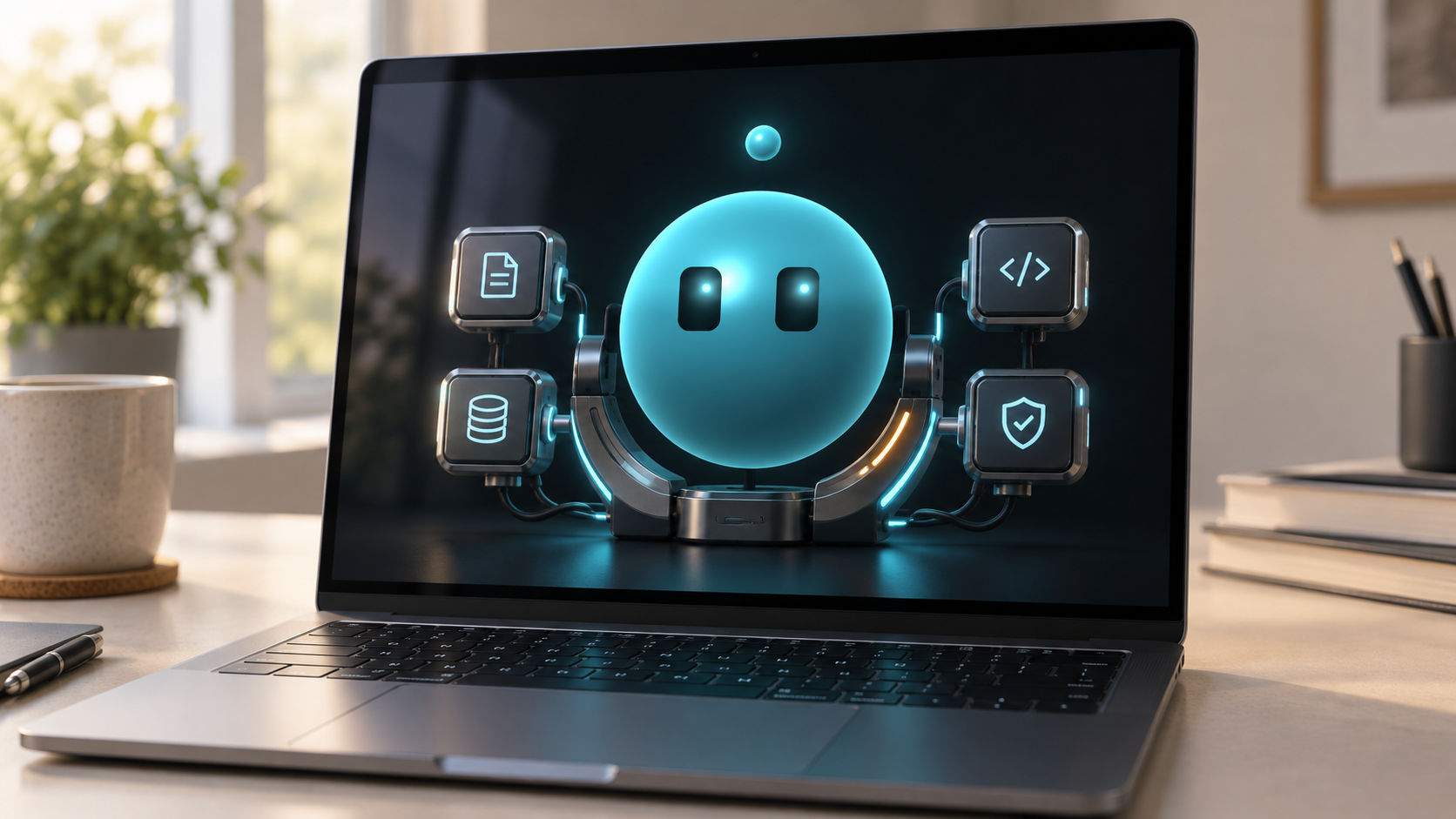
Working with real artificial intelligence, the kind that does serious desk work, is complex. There are models, instructions, tools connected to the company's systems, loops, limits, logs. An engineer has to know all of that. Nobody else in the company should have to. The mistake I keep seeing is trying to get the manager, the department head and the team to understand the machine. They won't, and they have no reason to. What they need is the same interface they already use with people. A role with a handbook. A boss who reviews what matters. A record of everything it did and why. And someone who answers when it fails.
That's a digital collaborator: the abstraction of complexity. It gives the machine a shape a company knows how to manage. With that shape, personification comes on its own, because people treat as a colleague whatever takes the place of a colleague.
Abstractions have a known problem: at some point they break, and you have to look underneath. The steering wheel hides the engine until the day the engine fails. With a digital collaborator, that day comes: it delivers a wrong number, cites a document that doesn't exist, decides something it shouldn't have. The hat is no use there. What's useful is that everything it did is written down, with its reasoning and its source, and that a boss with a name can open it and correct it. That's why we insist so much on the record. Personification makes it possible to work with it. The record makes it possible to trust it. Without the second, the first is dangerous, and fiction knew that too.
So next September 18 there's going to be a plate on a desk, for a digital colleague who works remotely. I say it with the same seriousness with which an org chart gets decided. Companies are going to add this technology in one of two ways: as a tool, and they'll end up with brilliant software nobody quite uses, or as part of the team, with a role, a boss and a record. The second is more demanding. And it's the only one that uses the technology to actually solve something.
Rodrigo Medina is the founder of MC Tech Studio and Yunt.